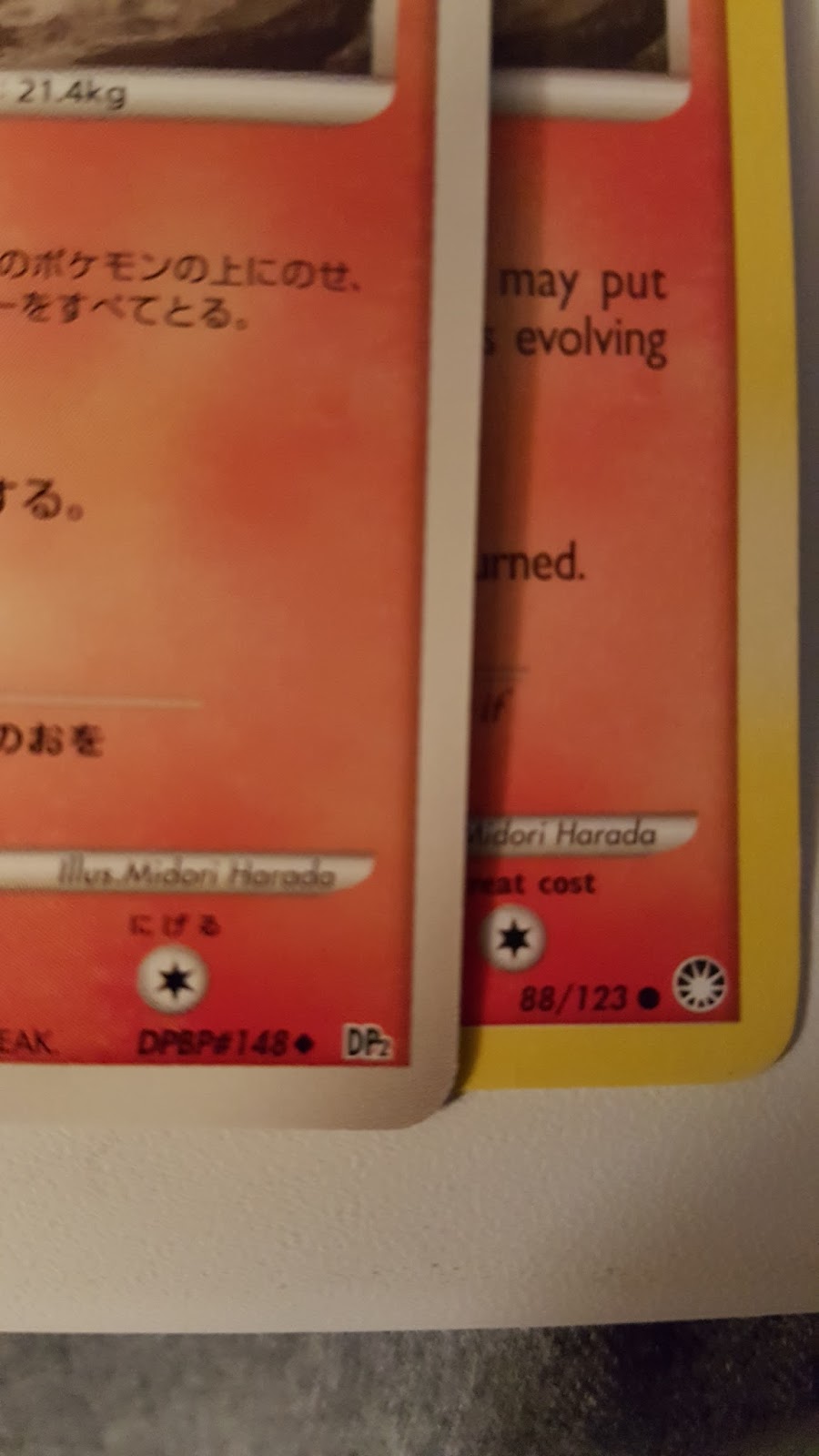
|
| Trend setters |
Sun and Moon is the TCG base set release of the eighth generation of Pokemon video games, and the set shares a number of similarities with previous base set releases. When I use the term "base set" in this context, I'm referring to a TCG set release that corresponds with a new generation of Pokemon video games (e.g., Base Set, ex Ruby and Sapphire, Diamond and Pearl, Black and White, X&Y, etc.) I'm not specifically referring to the first TCG set released by Wizards way back in 1999.
Base sets usually follow a few patterns, including:
1) Card template redesigns
2) Japanese release structure - base sets are released in the form of two separate booster sets which together make up the total release (e.g., Diamond Collection and Pearl Collection together make up Space-Time Creation, the Japanese version of Diamond and Pearl)
3) Changes in card distribution
4) New categories of rare pokemon
Sun and Moon fits all of the above characteristics.
1) Card template redesigns
Note the differences between the Caterpies and Metapods from Flashfire and Sun and Moon below:

As you can see from the caterpie evolution line above, the card design for the new set has moved away from the wavy aesthetic in the X&Y era to a more blocky format for Sun and Moon. The Japanese versions of these cards follow the same trend:


Reverse holos have also been remodeled:

Now, instead of multiple off-setting energy symbols, there is one large energy symbol surrounded by a textile pattern of smaller energy.
Additionally, the holo rare pattern has been changed to a wavy design and the new Pokemon GX (more on those in point 4) differ substantially in layout from their EX and Mega predecessors.
Note the differences between the Caterpies and Metapods from Flashfire and Sun and Moon below:

As you can see from the caterpie evolution line above, the card design for the new set has moved away from the wavy aesthetic in the X&Y era to a more blocky format for Sun and Moon. The Japanese versions of these cards follow the same trend:


Reverse holos have also been remodeled:

Now, instead of multiple off-setting energy symbols, there is one large energy symbol surrounded by a textile pattern of smaller energy.
Additionally, the holo rare pattern has been changed to a wavy design and the new Pokemon GX (more on those in point 4) differ substantially in layout from their EX and Mega predecessors.
2) Japanese release structure
As with previous base set releases, Sun and Moon were released in two separate booster sets: Collection Sun and Collection Moon. Together these two booster sets make up the composite SM1 set for Japan. Unlike previous Japanese base sets, Collection Sun and Collection Moon each have their own set sub-symbol. Cards from Collection Sun are labelled SM1S and cards from Collection Moon are labelled SM1M. This is a welcome change to the layout of the cards and will help new and old collectors alike keep better track of their collections.

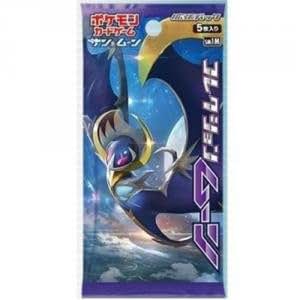
As with past Japanese base sets, certain cards are only available in Collection Sun and Collection Moon. Unlike Space-Time Creation where only a small handful of cards were unique to each of Pearl Collection and Diamond Collection, most of the cards appearing in Sun and Moon are only available in one of the subset booster packs. Only three cards appear in both booster packs: Cosmog, Cosmoem, and Eevee, This is another welcome design choice for collectors.
3) Changes in Card Distribution
English
In the English TCG, the size of booster packs have been increased to contain 11 cards: 5 commons, 3 uncommons 1 reverse holo, 1 rare (or better), and 1 energy card.
Unlike previous English expansions, the energy card does not contain a set number or the Sun and Moon set symbol.
Japanese sets have been releasing energy cards in this manner for years, but this is a first for the English TCG. In addition, full art cards (Ultra Rares and Secret Rares) take the spot of a common in the English TCG. This means you could, in theory and if really lucky, pull 3 rares in one pack in the English TCG.
English Booster Boxes continue to contain 36 packs per box, although the pull rate for rarer cards has been decreased (as discussed below).
Japanese
Japanese packs continue to contain 5 cards per pack (3 Common, 2 Uncommon with a chance for a Rare or better card) but booster boxes have been redesigned and increased to include 30 packs per box. Booster packs do not include energy cards.

4) New Categories of Rare Pokemon
Out with the old (EX, Megas, Breaks) and in with the new, welcome to the era of Pokemon GX:


Smoking hot. But the big question is: how rare are they? Before answering that question, its worth briefly discussing how card rarity is broken down in the English and Japanese versions of the TCG.
If you meander over to the official pokemon TCG website, you can click on links for each Nintendo era booster set. Each set page contains a link to an official checklist for that set. Below is a screen shot for the official Evolutions checklist (you can also view it by clicking here):

As you can see from the checklist, the official rarities for the cards in Evolutions are Common, Uncommon, Rare, Rare Holo ("H"), Rare EX ("EX"), Rare Break, and Rare Ultra (aka "Ultra Rare" or "UR"). Not listed on the official checklist are the secret rares from this expansion which have their own "Secret Rare" rarity. In most sets, the Secret Rares are the rarest cards available in booster packs (Evolutions is the exception to this rule). Note: a helpful commenter pointed out that the official checklist for Sun and Moon is currently available for download here: http://sm1.pokemontcg.com/assets/pdf/checklist/SM1_Web_Card_List_EN.pdf
On the Japanese side, cards have been broken down into the following rarities ever since XY:
C (common) - U (uncommon) - R (rare) - RR (double rare - which includes non-full art EXs, Megas, and Breaks) - SR (Super Rare - this is the English equivalent of an Ultra Rare) - UR (Ultra Rare - this is the English equivalent of a Secret Rare (in sets other than Evolutions)).
In both the English and Japanese TCG, the new Pokemon GX are available in 3 different rarities.
In English, these rarities are GX (the new version of the EX rarity and the Japanese equivalent of RR) - UR - Secret Rare.
In Japanese, these rarities are RR - SR - and a brand new "Hyper Rare" (HR) rarity.
Interestingly, in the Japanese set numbering, Hyper Rares come after Super Rares and before Ultra Rares. This is strong inferential evidence that HRs, while rarer than SRs, are still not officially as rare as URs in the Japanese TCG.
While we know the official rarities of the GX variants, the question remains, how likely are you to pull one in a booster pack?
Unfortunately, this is a difficult question. A truly accurate answer requires a sizable amount of data that I simply do not have. What I can say is that based on the English booster box I opened (which is an admittedly small sample size), I received a GX rare card in 1:9 packs, an Ultra Rare in 1:18 packs and, based on the pull rate from previous sets with Secret Rares and pull reports on other websites like r/pkmntcgcollections, pokebeach, and the elite four pro boards, Secret Rares appear to have a 1:72 pack pull rate.
On the Japanese end of the spectrum, it appears that people are reporting opening 2-3 RR GX pokemon per booster box (30 packs), an SR 1:1.5 booster boxes, and an HR or UR 1:2.5 booster boxes.
This obviously not nearly enough data to draw reliable conclusions from so, if you've opened a booster box of Sun and Moon in either English or Japanese, I encourage you to note your pulls in the comments so that I can update this post with additional data points.
Thanks for reading this week's edition of Regional Differences. Please don't hesitate to reach out if you have any questions, comments or suggestions.
As with previous base set releases, Sun and Moon were released in two separate booster sets: Collection Sun and Collection Moon. Together these two booster sets make up the composite SM1 set for Japan. Unlike previous Japanese base sets, Collection Sun and Collection Moon each have their own set sub-symbol. Cards from Collection Sun are labelled SM1S and cards from Collection Moon are labelled SM1M. This is a welcome change to the layout of the cards and will help new and old collectors alike keep better track of their collections.
As with past Japanese base sets, certain cards are only available in Collection Sun and Collection Moon. Unlike Space-Time Creation where only a small handful of cards were unique to each of Pearl Collection and Diamond Collection, most of the cards appearing in Sun and Moon are only available in one of the subset booster packs. Only three cards appear in both booster packs: Cosmog, Cosmoem, and Eevee, This is another welcome design choice for collectors.
3) Changes in Card Distribution
English
In the English TCG, the size of booster packs have been increased to contain 11 cards: 5 commons, 3 uncommons 1 reverse holo, 1 rare (or better), and 1 energy card.
 |
| Lies. All Lies. |
Unlike previous English expansions, the energy card does not contain a set number or the Sun and Moon set symbol.
 |
English Booster Boxes continue to contain 36 packs per box, although the pull rate for rarer cards has been decreased (as discussed below).
Japanese
Japanese packs continue to contain 5 cards per pack (3 Common, 2 Uncommon with a chance for a Rare or better card) but booster boxes have been redesigned and increased to include 30 packs per box. Booster packs do not include energy cards.
4) New Categories of Rare Pokemon
Out with the old (EX, Megas, Breaks) and in with the new, welcome to the era of Pokemon GX:
Smoking hot. But the big question is: how rare are they? Before answering that question, its worth briefly discussing how card rarity is broken down in the English and Japanese versions of the TCG.
If you meander over to the official pokemon TCG website, you can click on links for each Nintendo era booster set. Each set page contains a link to an official checklist for that set. Below is a screen shot for the official Evolutions checklist (you can also view it by clicking here):

As you can see from the checklist, the official rarities for the cards in Evolutions are Common, Uncommon, Rare, Rare Holo ("H"), Rare EX ("EX"), Rare Break, and Rare Ultra (aka "Ultra Rare" or "UR"). Not listed on the official checklist are the secret rares from this expansion which have their own "Secret Rare" rarity. In most sets, the Secret Rares are the rarest cards available in booster packs (Evolutions is the exception to this rule). Note: a helpful commenter pointed out that the official checklist for Sun and Moon is currently available for download here: http://sm1.pokemontcg.com/assets/pdf/checklist/SM1_Web_Card_List_EN.pdf
On the Japanese side, cards have been broken down into the following rarities ever since XY:
C (common) - U (uncommon) - R (rare) - RR (double rare - which includes non-full art EXs, Megas, and Breaks) - SR (Super Rare - this is the English equivalent of an Ultra Rare) - UR (Ultra Rare - this is the English equivalent of a Secret Rare (in sets other than Evolutions)).
In both the English and Japanese TCG, the new Pokemon GX are available in 3 different rarities.
 |
| Screenshot from Bulbapedia at http://bulbapedia.bulbagarden.net/wiki/Lapras-GX_(Sun_%26_Moon_35) |
In English, these rarities are GX (the new version of the EX rarity and the Japanese equivalent of RR) - UR - Secret Rare.
In Japanese, these rarities are RR - SR - and a brand new "Hyper Rare" (HR) rarity.
Interestingly, in the Japanese set numbering, Hyper Rares come after Super Rares and before Ultra Rares. This is strong inferential evidence that HRs, while rarer than SRs, are still not officially as rare as URs in the Japanese TCG.
While we know the official rarities of the GX variants, the question remains, how likely are you to pull one in a booster pack?
Unfortunately, this is a difficult question. A truly accurate answer requires a sizable amount of data that I simply do not have. What I can say is that based on the English booster box I opened (which is an admittedly small sample size), I received a GX rare card in 1:9 packs, an Ultra Rare in 1:18 packs and, based on the pull rate from previous sets with Secret Rares and pull reports on other websites like r/pkmntcgcollections, pokebeach, and the elite four pro boards, Secret Rares appear to have a 1:72 pack pull rate.
On the Japanese end of the spectrum, it appears that people are reporting opening 2-3 RR GX pokemon per booster box (30 packs), an SR 1:1.5 booster boxes, and an HR or UR 1:2.5 booster boxes.
This obviously not nearly enough data to draw reliable conclusions from so, if you've opened a booster box of Sun and Moon in either English or Japanese, I encourage you to note your pulls in the comments so that I can update this post with additional data points.
Thanks for reading this week's edition of Regional Differences. Please don't hesitate to reach out if you have any questions, comments or suggestions.